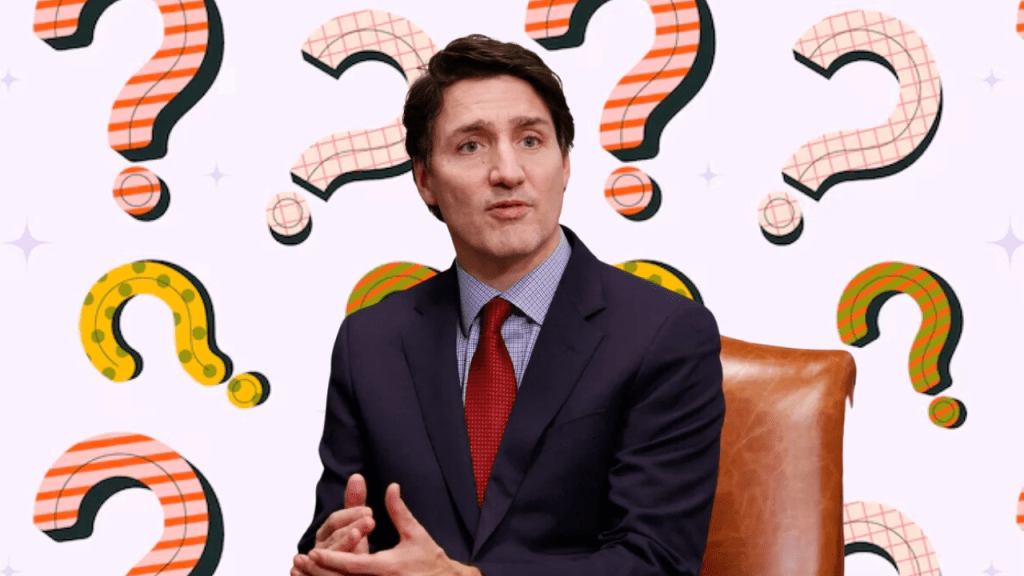
Trudeau survives a third no-confidence vote with NDP support, highlighting Liberal resilience, Conservative challenges, and Canada’s parliamentary gridlock.
Canadian Prime Minister Justin Trudeau’s minority Liberal government has survived a third no-confidence vote in as many months, underscoring the complexities of Canada’s parliamentary system and the challenges facing the opposition Conservatives. The motion, brought forward by Trudeau’s main rival, Conservative leader Pierre Poilievre, was defeated 180-152, with critical support from the New Democratic Party (NDP).
The result demonstrates the Liberals’ continued ability to hold onto power despite growing criticisms and a weakened position in Parliament. The NDP’s support was pivotal, even as the party ended its formal partnership with the Liberals in August. NDP leader Jagmeet Singh, who has been publicly critical of Trudeau—accusing him of being “too weak, too selfish”—nonetheless provided the votes necessary to keep the Liberal government afloat. Notably, neither Singh nor Trudeau attended the vote.
The no-confidence motion took place against the backdrop of a highly dysfunctional parliamentary session. The House of Commons has been mired in gridlock for much of the autumn due to a two-month filibuster led by the Conservatives. The prolonged standoff has brought legislative progress to a halt, prompting Speaker Greg Fergus to intervene. In a rare move, Fergus suspended the gridlock temporarily to allow for confidence votes and a critical upcoming vote on a spending package, which includes funding for social services, disaster relief, and support for Ukraine.
Poilievre and the Conservatives, who currently enjoy a commanding 20-point lead in opinion polls, have been pushing aggressively for an early Canada election. Buoyed by their growing popularity and Trudeau’s declining approval ratings, the Conservatives see an opportunity to capitalize on Liberal vulnerabilities. However, the NDP and Bloc Quebecois have so far refused to align with the Conservatives to topple the government, preferring to preserve the current parliamentary dynamics.
This refusal reflects the unique nature of Canada’s Westminster system, where the ruling party must maintain the confidence of the House of Commons to remain in power. While Trudeau’s Liberals are operating as a minority government, they have managed to secure enough cross-party support to maintain control. The current seat distribution—153 for the Liberals, 119 for the Conservatives, 33 for the Bloc Quebecois, and 25 for the NDP—underscores the difficulty of dislodging the Liberals without broad opposition unity.
Trudeau, who swept to power in 2015 with a majority government, has since seen his position erode, particularly in the 2019 and 2021 elections, which reduced the Liberals to minority status. Despite mounting pressures and a contentious political climate, Trudeau has demonstrated a remarkable ability to navigate minority rule and survive repeated challenges from his opponents.
The Conservatives’ inability to force an election highlights a key challenge: without a majority, forming government remains difficult even if the Liberals lose confidence. The NDP, Greens, and Bloc Quebecois have all been reluctant to trigger an election that could hand a majority to the Conservatives.
As Trudeau’s government continues to endure, the focus will remain on whether the Liberals can adapt to shifting political tides and whether opposition parties can overcome their divisions to present a united front. For now, Trudeau’s survival reflects not only his political resilience but also the fragmented nature of Canada’s opposition landscape.



 ElectionOdds.ca