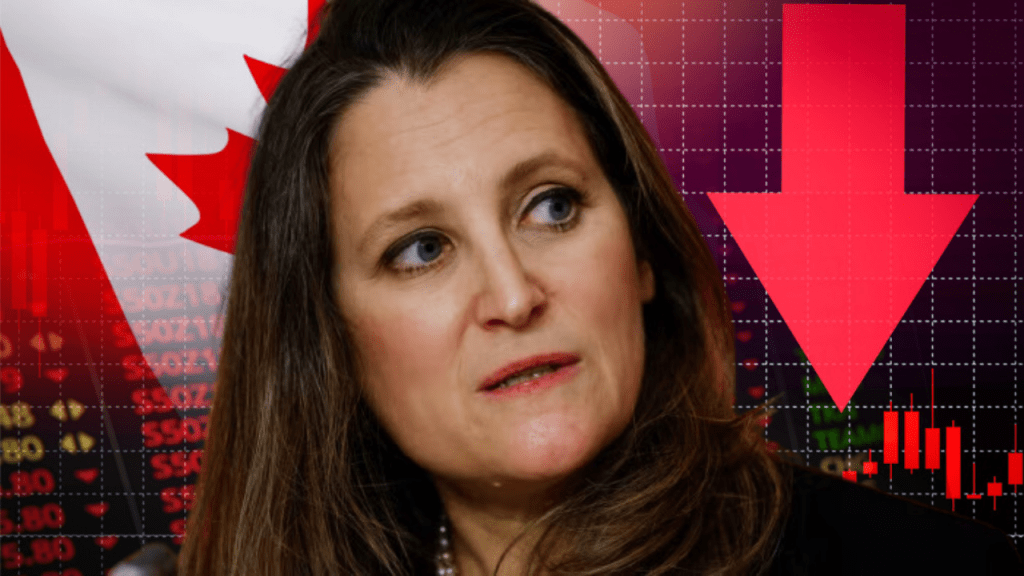
Freeland Resigns: Trudeau faces leadership crisis as cabinet instability raises questions about Liberal Party’s future and the upcoming election.
Chrystia Freeland’s abrupt resignation as Finance Minister and Deputy Prime Minister has sent shockwaves through Canadian politics, raising serious questions about the stability of Prime Minister Justin Trudeau’s leadership and the future of the Liberal Party. Her unexpected departure, alongside other recent cabinet resignations, has exposed deep cracks within the Liberal government and comes at a precarious time for the party.
Government Instability and Leadership Uncertainty
Freeland’s resignation is a major blow to Trudeau’s leadership, signaling internal discord and declining support within his government. The timing is particularly concerning, occurring just weeks before the Fall Economic Statement, an important fiscal milestone that sets the government’s priorities for the coming year.
Without Freeland, who has been a key figure in Canada’s economic strategy, questions arise about the government’s ability to manage economic challenges amid rising inflation and public dissatisfaction.
The resignation has also amplified calls for Trudeau to step down. Some Liberal MPs are reportedly urging him to consider his position as leader, while political analysts speculate that this moment could be the “coup de grâce” for his tenure. Freeland’s move has fueled rumors that she may be positioning herself as a contender in a potential Liberal leadership race.
Impact on the Next Election
The upheaval comes as the Liberal Party faces mounting electoral challenges. Polling data paints a grim picture: the Conservatives are now leading by a wide margin, with 43% support among committed voters compared to the Liberals’ 21%. The NDP, meanwhile, is closing in with 19%, particularly outside of Quebec, where the Liberals have traditionally maintained stronger support.
In Quebec, where the Liberals and Conservatives are tied at 25%, the Bloc Québécois leads with 34%—a further indication of the Liberals’ struggles. According to recent polling, 54% of Canadians believe the Conservatives will win the next election, while only 15% expect a Liberal victory.
This instability raises concerns about whether the Liberal Party could even retain its status as the official opposition. If current trends hold, the NDP could surpass the Liberals in seat count, reshaping Canada’s political landscape.
What Happens if Trudeau Resigns?
If Trudeau resigns, the Liberal Party would face a swift leadership transition process. An interim leader would be appointed, and the party’s national president would have 27 days to organize a leadership vote. Members would cast their votes using a preferential ballot system, with results weighted by electoral districts.
Trudeau may also choose to prorogue Parliament, temporarily suspending all legislative business, as he did during the WE Charity controversy in 2020. While this would buy the Liberals time to conduct a leadership race and regroup, it would likely face backlash from opposition parties accusing the government of avoiding accountability.
Adding to the volatility, the end of the Liberal-NDP supply-and-confidence agreement means Trudeau’s resignation could trigger a snap election. If the New Democrats join the Conservatives in a confidence vote, the Liberal Party could find itself plunged into an election campaign without a permanent leader.
A Shifting Political Landscape
Freeland’s departure and the broader cabinet instability mark a moment of crisis for the Trudeau government. The Liberals are grappling with internal fractures, declining public support, and an energized opposition.
With the next Canada federal election looming, the political stakes are high. The Conservatives’ growing lead and the NDP’s rising influence suggest the Liberals face the possibility of losing power—and perhaps even their place as Canada’s main opposition party. Freeland’s resignation may prove to be the tipping point in an already precarious chapter for Trudeau and his government.



 ElectionOdds.ca