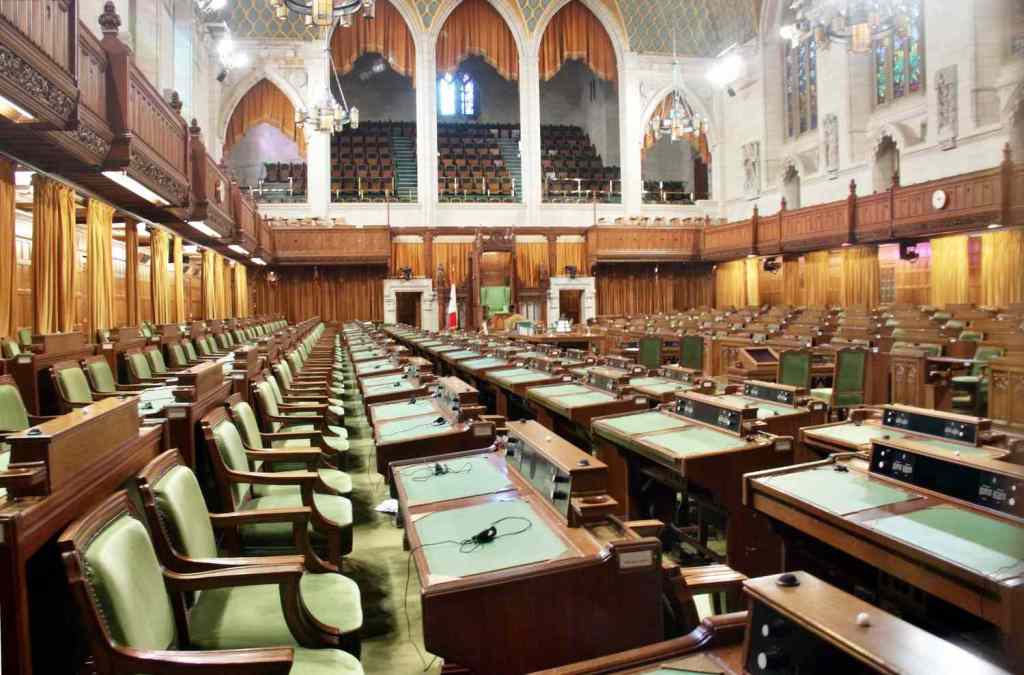
The Westminster system in Canada fosters strategic coalitions, minority governments, and shifting alliances in a changing political landscape.
Canadian politics is in the midst of a fascinating transformation that stems, in large part, from the unique nature of its Westminster system. While many observers try to interpret Canada’s political world through the lens of a two-party model—similar to the United States—this overlooks critical nuances of how parliamentary democracies function. Below is an in-depth look at how federal leadership battles, provincial dynamics, and unexpected global influences are converging to reshape Canada’s Westminster system in intriguing ways.
The Power of a Plurality
One of the most striking factors in Canada’s current political environment is how the ruling Liberal Party has managed to win recent elections by securing only about 33% of the popular vote. This is possible precisely because of the Westminster system, which does not require a party to capture an outright majority to form government. Instead, a party can take power with a plurality of seats—sometimes aided by agreements with other parties to stay in office.
This delicate balance means that if just a small portion of the center-left electorate consolidates around a single party, it can dramatically reduce the likelihood of a Conservative majority. The power of coalition-building, or even strategic voting, becomes amplified in the Westminster system, as smaller shifts can topple or prop up an incumbent government.
Trump’s Influence and the Canadian Reaction
Recent political shifts aren’t happening in a vacuum. The polarizing politics of former U.S. President Donald Trump have reverberated north of the border, triggering a wave of reactions in Canadian discourse. Some argue that Trump’s tenure sparked an urgency among Canadian voters to prevent an ultra-conservative wave at home. Interestingly, this may help left-leaning parties gain traction or, at the very least, push Conservatives to moderate their stances to appeal to a broader base in the Westminster system.
The rise of populist or far-right figures in Canada faces additional hurdles because multiple parties can unite to block a party with the most seats but no outright majority. These alliances often hinge on the question: “What can you do for us right now?” A Conservative Party that leans too far right could find itself outmaneuvered by coalitions of other parties that see an opportunity to demand significant social or economic concessions.
Why Quebec Is Key
Adding another layer of complexity is Quebec’s pivotal role in the Westminster system. Historically, only on rare occasions has a federal leader won without also securing significant support in Quebec. Because Quebec often behaves like a collection of “swing states” within a single province, parties must craft policies that resonate with Quebecers—while not alienating the rest of the country.
This can create scenarios where the Bloc Québécois holds a balance of power that fundamentally shapes government formation. If the Conservatives fail to gain traction in Quebec, they might win the most seats nationwide but still be prevented from governing if other parties form a coalition. This unique dynamic in the Westminster system frequently places Quebec in a position of heightened influence, able to negotiate for federal promises in exchange for support.
Possible Coalition Scenarios
One emerging hypothesis predicts a small Conservative minority win that immediately faces a potent coalition. Under the Westminster system, the party with the second-largest number of seats—or a combination of smaller parties—can attempt to form government if they collectively outnumber the leading party. However, in Canada, the leader of the Bloc Québécois traditionally cannot become Prime Minister. This opens the door for figures like Mark Carney—if he takes the helm of the Liberals—to form a coalition with parties such as the NDP, the Greens, and the Bloc.
In this scenario, an emboldened far-right faction within the Conservative base could react strongly to being sidelined. Some fear this might resemble another “convoy” or protest movement, potentially tarnishing the Conservative brand. If that backlash grows, it could lead to new leadership within the Conservative Party, possibly ushering in a more moderate conservative figure who could better appeal to swing voters in future elections.
The Future of Progressive Conservatism
Many analysts believe that for Conservatives to gain broader acceptance in Canada’s Westminster system, the party must reclaim the “Progressive Conservative” tradition. A far-right posture might energize a vocal minority, but risks alienating Canadians who lean socially liberal on federal issues yet might vote Conservative at the provincial level.
Should a new moderate conservative leader emerge—someone who understands the unique coalition-friendly nature of the Westminster system—the party might secure the government. Individuals like Doug Ford have managed to capture both a conservative base and those less ideologically rigid in provincial elections. Whether Ford or another figure steps into this national role remains speculative, but the potential is there.
Canada’s Westminster system fosters a dynamic political stage where no party’s victory is guaranteed by raw vote counts alone. Coalition possibilities, strategic alliances, and Quebec’s swing influence all play pivotal roles. When external factors—like American populism—enter the equation, the system’s structural quirks become even more pronounced. The next few elections could see minority governments rise and fall, unexpected coalitions form, and leadership shake-ups redefine Canadian politics for years to come. In the end, it’s the flexibility of the Westminster system that makes these developments both unpredictable and uniquely Canadian.



 ElectionOdds.ca
Leave a comment