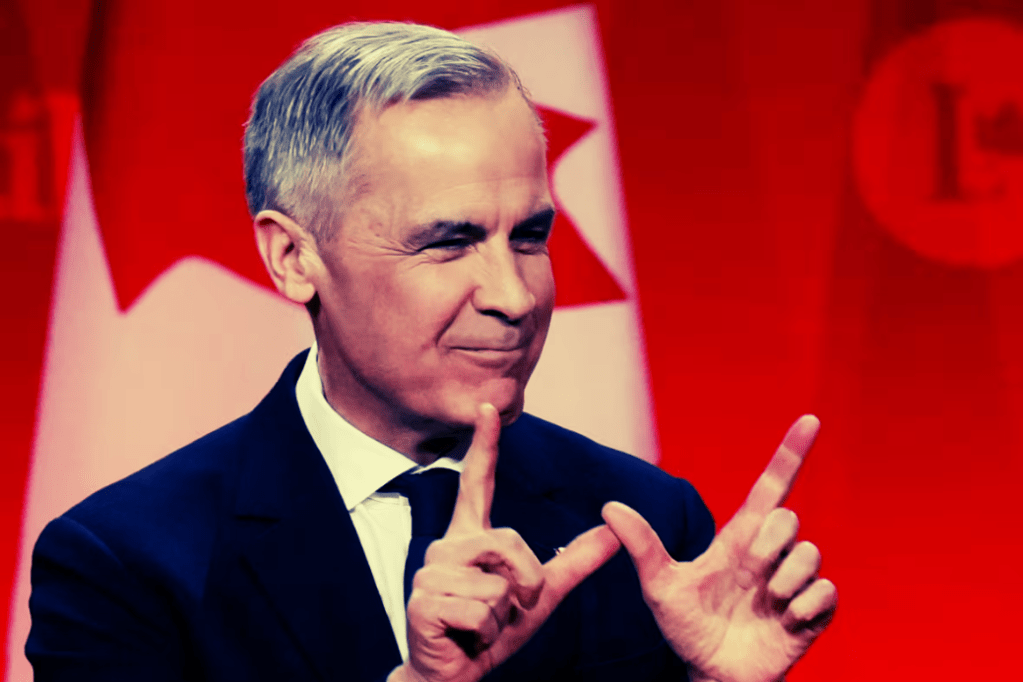
Mark Carney Liberal leadership win showcased overwhelming party support, confirming his frontrunner status and setting the tone for the Liberal Party’s next chapter.
Mark Carney’s decisive win in the recent Liberal leadership race has cemented his position as the party’s clear frontrunner, as he captured 85.9% of the vote—an overwhelming margin of support that left his rivals far behind. Backed by strong betting market confidence and political momentum, Carney’s performance reaffirmed his status as the dominant figure in the race, silencing speculation around the viability of his competitors.
Heading into the leadership contest, Carney was already viewed as the prohibitive favourite. Betting markets listed him at staggering odds of -5000, implying a 98.04% probability of victory. While these odds suggested near-unanimous belief in his success, Carney’s actual vote share of nearly 86% was a tangible confirmation of his grip on party support.
The gulf between Carney and the rest of the field underscores just how commanding his victory was. His closest challenger, Anita Anand, entered the race with odds of +1500, implying only a 6.25% chance of success. Other potential candidates—including François-Philippe Champagne (+2000), Chrystia Freeland (+2500), and Sean Fraser (+3000)—were seen as long shots, and the final results validated those projections. None came close to threatening Carney’s lead.
This level of dominance is relatively rare in federal leadership contests. In 2013, Justin Trudeau won the Liberal leadership with 80.1% of the vote—a strong result, though still slightly below Carney’s margin. In that race, Trudeau also held firm betting support, with odds around -800 (88.89% implied probability), but the field was somewhat more competitive.
Looking further back, the 2006 Liberal leadership race was far more fragmented. No clear favorite emerged, and eventual winner Stéphane Dion overtook early frontrunner Michael Ignatieff in a result that highlighted just how uncertain leadership races can be. Compared to that, Carney’s path to victory appeared exceptionally smooth and unified.
Carney’s support among both political insiders and the broader party base suggests a consolidating force within the Liberal ranks. While critics have pointed to his background as a central banker and questioned his political instincts, the leadership race results indicate that those concerns were outweighed by his perceived competence, leadership potential, and ability to unify the party ahead of the next federal election.
The one-sided nature of this contest may also speak to the broader dynamics within the Liberal Party. With the party still in power federally, the appetite for an internal contest or major shake-up appears limited. Carney’s commanding win may reflect not only his individual appeal but also a collective desire for stability and continuity as the Liberals prepare for future challenges.
While some observers note that betting markets tend to overstate the margins of frontrunners, in Carney’s case the outcome came remarkably close to matching the market’s high expectations. More importantly, it demonstrated just how little resistance he faced from within his own party.
As the dust settles, Carney emerges not only as the winner but as a clear signal of where the Liberal Party intends to go next—with unity, consolidation, and a formidable leader at the helm.



 ElectionOdds.ca
Leave a comment