Unelected Prime Ministers in Canada are more common than many realize, with history showing several leaders took office without winning a general election first.
Mark Carney has officially become Canada’s Prime Minister—but without having won a general election or holding a seat in the House of Commons. While this might raise eyebrows, Mark Carney is far from the first Canadian leader to rise to power through party leadership rather than a public vote.
In fact, becoming Prime Minister without being elected is a well-established feature of Canada’s parliamentary system, and one that history shows often comes with significant political challenges.
Under the Westminster model, the Prime Minister is not directly chosen by the public but is instead the person who commands the confidence of the House of Commons. Typically, this means the leader of the party with the most seats in Parliament. When the leader of that party steps down—whether due to retirement, resignation, or internal pressure—the party can select a new leader who automatically becomes Prime Minister, even if that person does not currently hold a seat in Parliament or hasn’t led the party through a general election.
This is exactly how Carney entered office. After assuming leadership of the Liberal Party, he was appointed Prime Minister by the Governor General, following the constitutional norms of the system. While he intends to seek a seat in Parliament in an upcoming by-election, his current position at the helm of the government marks yet another instance in Canadian history where leadership has transferred without a general vote.
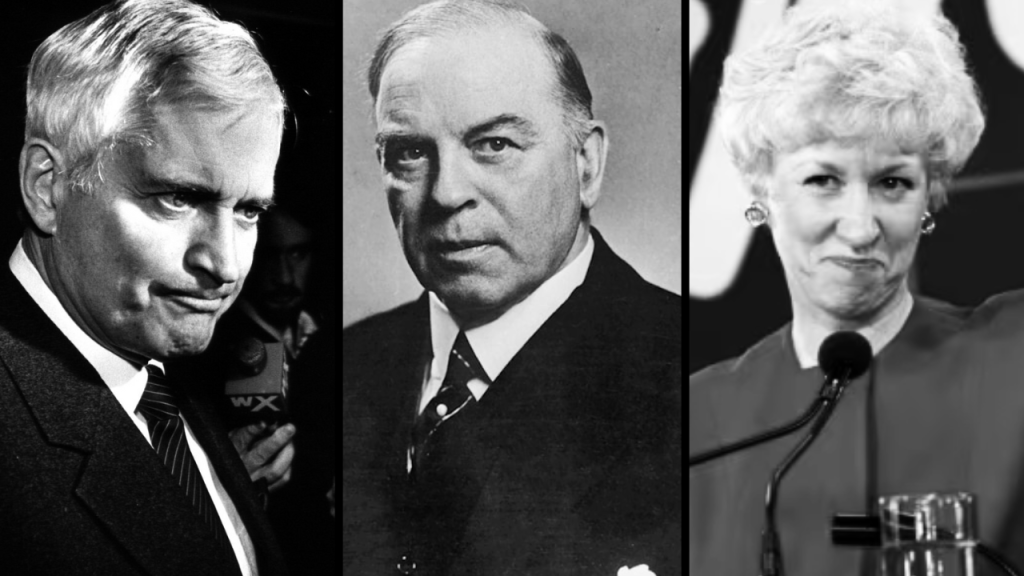
Historically, this path to power has been anything but rare. In 1984, John Turner became Prime Minister after succeeding Pierre Trudeau as Liberal leader—despite not having a seat in Parliament at the time.
In 1993, Kim Campbell became Canada’s first female Prime Minister under similar conditions, taking over from Brian Mulroney and leading the Progressive Conservatives into an election just months later. Both faced steep challenges and saw their tenures cut short after assuming the role without the benefit of an electoral mandate.
Going back even further, John Abbott and Mackenzie Bowell each became Prime Minister in the 1890s while sitting in the Senate rather than the House of Commons. William Lyon Mackenzie King, Canada’s longest-serving Prime Minister, famously governed twice without holding a seat—once in 1925 and again in 1945—using the flexibility of the parliamentary system to maintain power until he could return through a by-election.
While the constitution does not require the Prime Minister to be an elected Member of Parliament, the absence of a public mandate can present political vulnerabilities. Unelected Prime Ministers often face added scrutiny, reduced legitimacy in the eyes of the public, and pressure to quickly secure their own seat. Unless their appointment occurs during a time of national crisis or transition, these leaders often enter office on uncertain footing.
Mark Carney’s appointment fits within a long tradition of leadership changes shaped more by internal party dynamics than electoral campaigns.
As history shows, becoming Prime Minister without first being elected isn’t unusual—but heading into Canada’s 2025 election, it may make Carney’s path even more uncertain.



 ElectionOdds.ca
Leave a comment